
Ship "chat to your marketing data" in days, not quarters. Here's what AI analytics actually makes possible.

Ka Ling Wu
Co-Founder and CEO
10 min

Marketing has entered a new era where the old rules no longer apply. According to HubSpot's 2026 State of Marketing Report, 61% of marketers believe marketing is experiencing its biggest disruption in 20 years due to AI. The expectations around campaign iteration, creative volume, and performance reporting have fundamentally shifted. The marketers who can't keep up are falling behind.
Whether you're an in-house marketer defending your budget to the C-suite, an agency fighting to prove ROI to demanding clients, or a freelancer juggling multiple accounts, the pressure to deliver timely, actionable insights has never been greater. The volume of data has exploded, the pace of change has accelerated, and the tools that worked even two years ago are struggling to keep up.
The New Reality: How Marketing Expectations Have Transformed
The relationship between marketers and their stakeholders has fundamentally changed. Understanding this shift is critical for anyone building or buying marketing intelligence solutions.
The Before: Quarterly Reports and Monthly Reviews
Just a few years ago, the marketing reporting cadence looked predictable. Agencies held biweekly or monthly meetings with clients to review campaign performance. Creatives got tested for four to six weeks before decisions were made. A/B testing was the gold standard: compare two variants, pick a winner, move on.
Dashboards were built in Excel or BI tools, updated manually, and often showed data that was days or weeks old. The process of analyzing, synthesizing, and presenting could take hours or days per client.The After: Weekly Sprints and Real-Time Iteration
Today, the cadence has compressed dramatically. As today, more content is generated by AI than by humans.
This content explosion creates a paradox. More assets to monitor, more channels to optimize, and more pressure to prove what's actually working. Client meetings have shifted from biweekly to weekly, with regular async Slack or Teams touchpoints in between. Creatives that used to run for a month now get swapped out every two weeks, or faster.
The result? A/B testing is no longer sufficient. Welcome to the age of A-Z testing, where marketers are running dozens of creative experiments simultaneously across multiple platforms.
The Compounding Complexity Problem
Here's what makes AI for marketing intelligence not just valuable but essential: the compounding effect of increased volume, velocity, and variety.
Consider a typical performance marketing scenario:
5 platforms (Meta, Google, TikTok, LinkedIn, programmatic)
10 creative variants per platform per campaign
Weekly iteration cycles instead of monthly
Multiple audience segments per creative
That's potentially hundreds of data points to analyze every week, just for one campaign. Multiply that across a portfolio of clients or brands, and the manual analysis approach collapses under its own weight.
The Marketing Personas Under Pressure
Different marketing professionals face unique versions of this challenge. Understanding these personas helps clarify why AI-powered marketing intelligence has become mission-critical.
In-House Marketing Teams
In-house marketers face relentless pressure to justify their budgets. Every dollar spent on advertising must be traced to business outcomes, and CFOs are asking harder questions.
According to the Salesforce State of Marketing Report, teams frequently struggle with integrating AI into existing workflows while unifying customer data from disparate sources. And the challenge isn't just collecting data. It's making sense of it fast enough to act.
In-house teams typically need:
Attribution clarity across the full customer journey
Budget justification that connects media spend to revenue
Cross-channel visibility without switching between twelve different platforms
Marketing and Advertising Agencies
Agencies face a different but equally intense pressure: proving value to clients who now have access to the same dashboards they do. The old model of "trust us, we know what's working" doesn't fly when clients can see platform-native analytics themselves.
According to ADWEEK's coverage of agency business models, agencies are grappling with an existential question: how to add value in an industry transformed by AI. WPP's $676 million annual cost-cutting plan reflects the broader pressure to do more with less while delivering faster results.
Agencies need:
Scalable reporting that doesn't require hours of manual work per client
Insight differentiation that goes beyond what clients can see themselves
Proactive recommendations that demonstrate strategic value
Freelance Marketers and Consultants
Freelancers operate with the tightest resource constraints and the highest expectations for personal responsiveness. They don't have data teams or BI specialists to lean on. They need to be the strategist, analyst, and executor all in one.
For freelancers, AI for marketing intelligence isn't about efficiency. It's about capability. Tools that can surface insights automatically transform what a solo operator can deliver.
Why Traditional Marketing Analytics Falls Short
The pain points that marketers face today aren't new, but they've intensified. Legacy systems built for a slower, simpler era simply can't keep up.
The Data Fragmentation Problem
Marketing data lives everywhere: ad platforms, CRMs, analytics tools, attribution systems, and spreadsheets. Data is often scattered across dozens of disconnected platforms.
Without a unified view, marketers can't answer basic questions:
Which channel actually drove this conversion?
How does creative performance vary by audience segment?
Where should the next dollar go?
The Speed-to-Insight Gap
The IAB and BWG Global State of Data 2026 report found that 75% of marketers say their measurement systems aren't delivering the speed, accuracy, or trust they need.
The problem is as much data quality as it is feedback loop timing. Traditional marketing mix modeling (MMM) updates quarterly or annually. Multi-touch attribution (MTA) requires manual configuration and interpretation. By the time insights are available, the campaign has already moved on.
The Channel Blindspot
Legacy measurement tools also systematically underrepresent emerging channels.
77% of marketers say gaming is underrepresented in their marketing mix models
50% say commerce media is overlooked
48% say the creator economy is significantly undervalued
This underrepresentation leads to underinvestment in the channels where consumers are most engaged—a strategic blindspot that compounds over time.
AI for Marketing Intelligence: The Competitive Edge
This is where AI application in marketing intelligence platforms change the game.
From Manual Analysis to Conversational Insights
The most visible change is the interface: instead of building queries, creating filters, and interpreting charts, marketers can simply ask questions in natural language. "Which creative drove the highest ROAS last week?" "How does performance compare across platforms?" "What should I pause?"
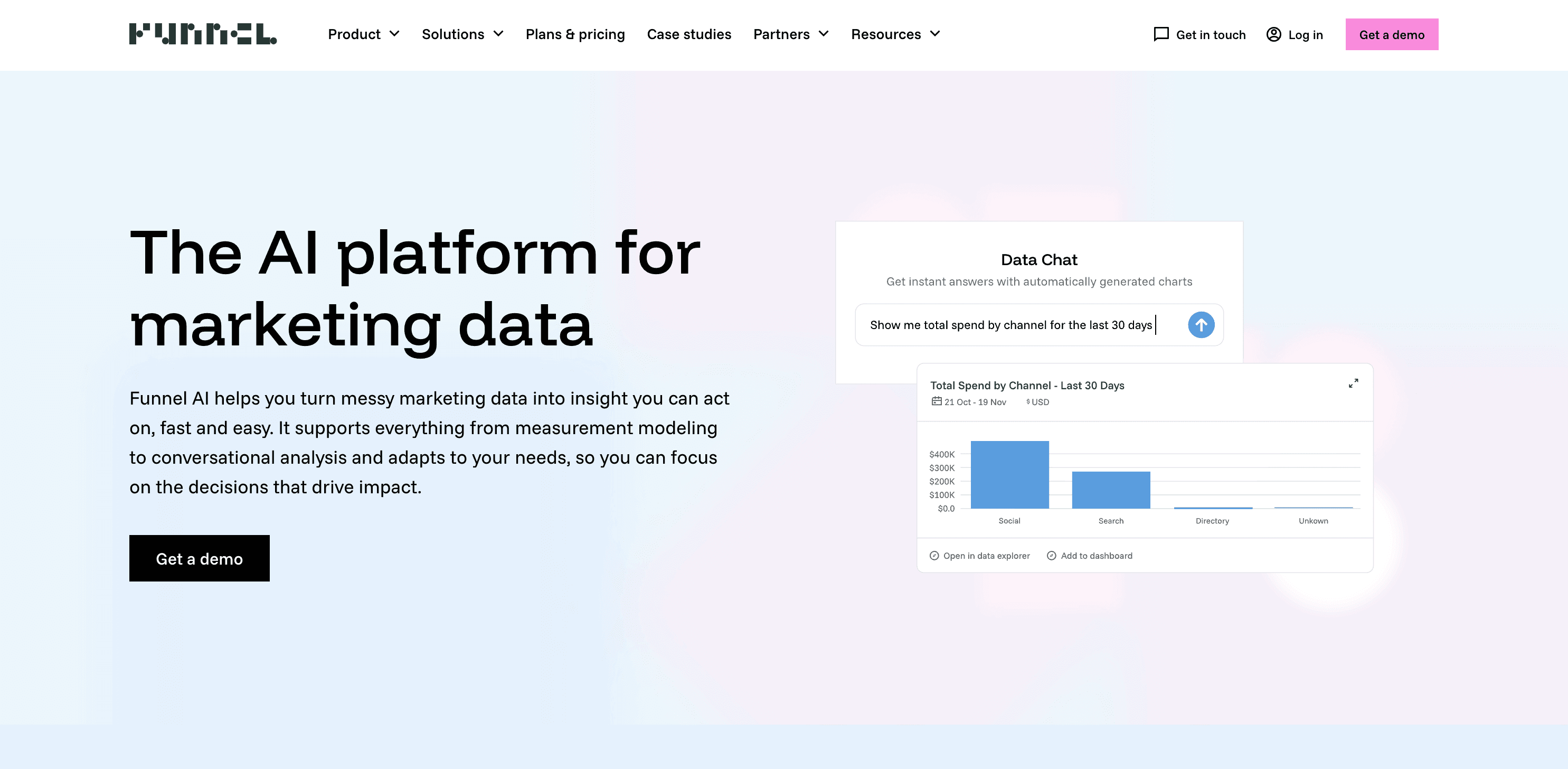
Platforms like Triple Whale have already shipped their Moby AI agent, which provides conversational access to marketing data. Improvado promises to automate up to 99.5% of routine analytics tasks with AI agents. Funnel.io emphasizes that AI-driven marketing starts with trustworthy, unified data.
This represents a fundamental shift in who can access insights, how fast they can act on them, and who wins.
Real-Time Measurement and Adaptive Attribution
AI enables a move from periodic model updates to continuous, adaptive measurement. Instead of quarterly MMM refreshes, teams can get monthly, weekly, or even real-time feedback on what's working.
The IAB report estimates this shift will drive $6.2 billion in productivity gains as marketers spend more time interpreting results and less time wrangling data. When the analysis happens automatically, humans can focus on strategy and creative direction.
Democratized Advanced Analytics
Complex techniques like multi-touch attribution, incrementality testing, and cross-channel lift analysis have historically required dedicated data science teams. AI is changing that by packaging query models into accessible interfaces.
As the IAB report notes, about 50% of buy-side marketers are already scaling AI within their measurement programs, with more than 70% of teams expecting to adopt AI-powered measurement by 2027.
What This Means for Martech Platforms
For marketing technology companies specialising in data integration and analytics, platforms like Funnel.io, Supermetrics, Improvado, the message is clear: conversational AI is becoming an expectation and is no longer optional.
The Feature-Match Imperative
Triple Whale and Funnel.io have already rolled out their first versions of AI-powered chat interfaces. This creates immediate pressure for competitive feature-matching. When prospects see that a competitor offers "talk to your data" functionality, the absence of that capability becomes a sales objection.
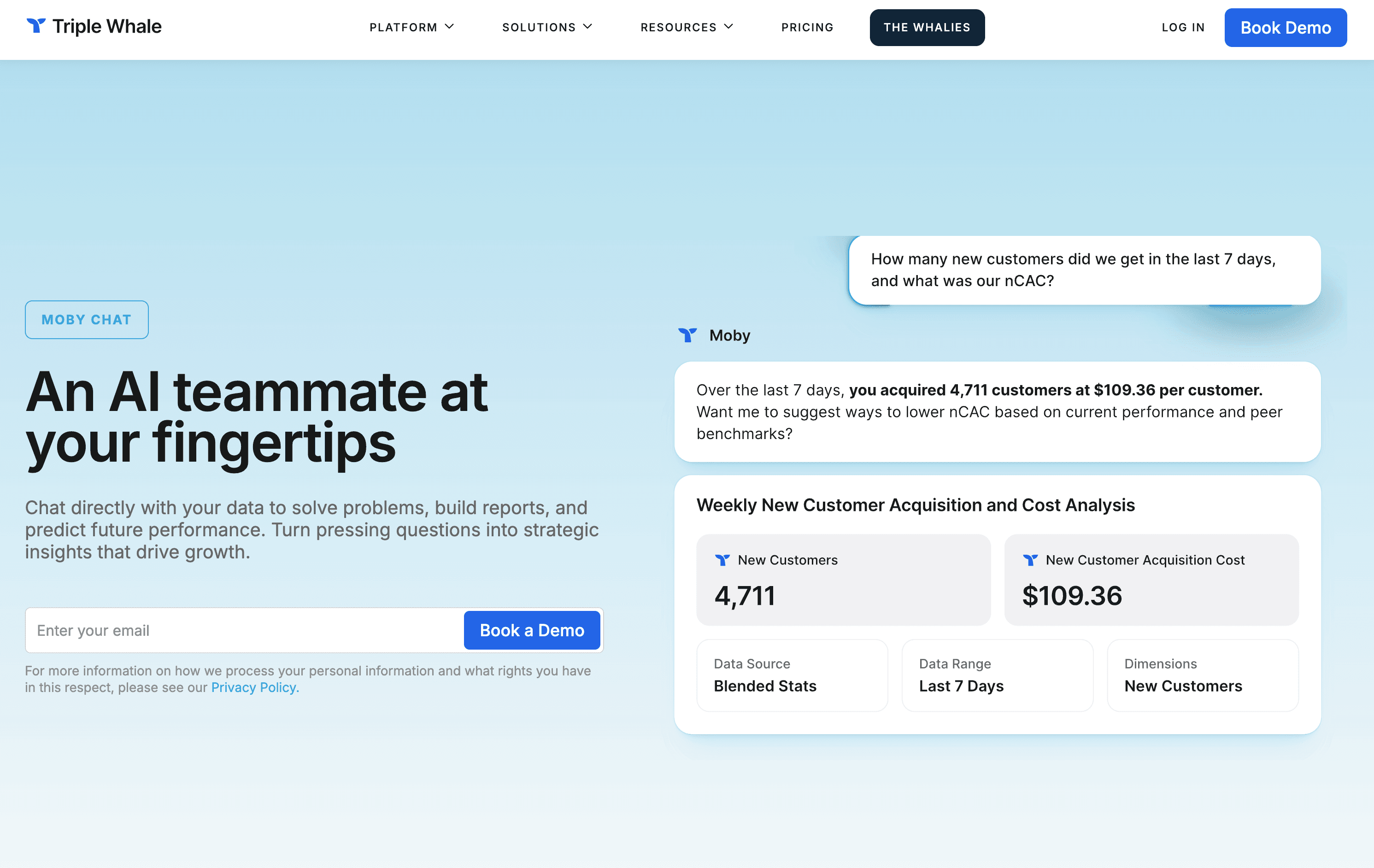
Platforms that can offer a data analyst agent capable of pulling insights, building interactive dashboards, and creating reports on the fly will have a significant competitive advantage.
The AI-powered Marketing Analytics Opportunity
This is where platforms like Upsolve AI become strategic. By embedding a conversational data analyst that queries data, build charts as well as dashboards, and writes analytical summaries directly into existing martech products, marketing data platforms can:
Accelerate time-to-market for AI features without building from scratch. Start running beta in days not quarters.
Differentiate their offering with natural language analytics
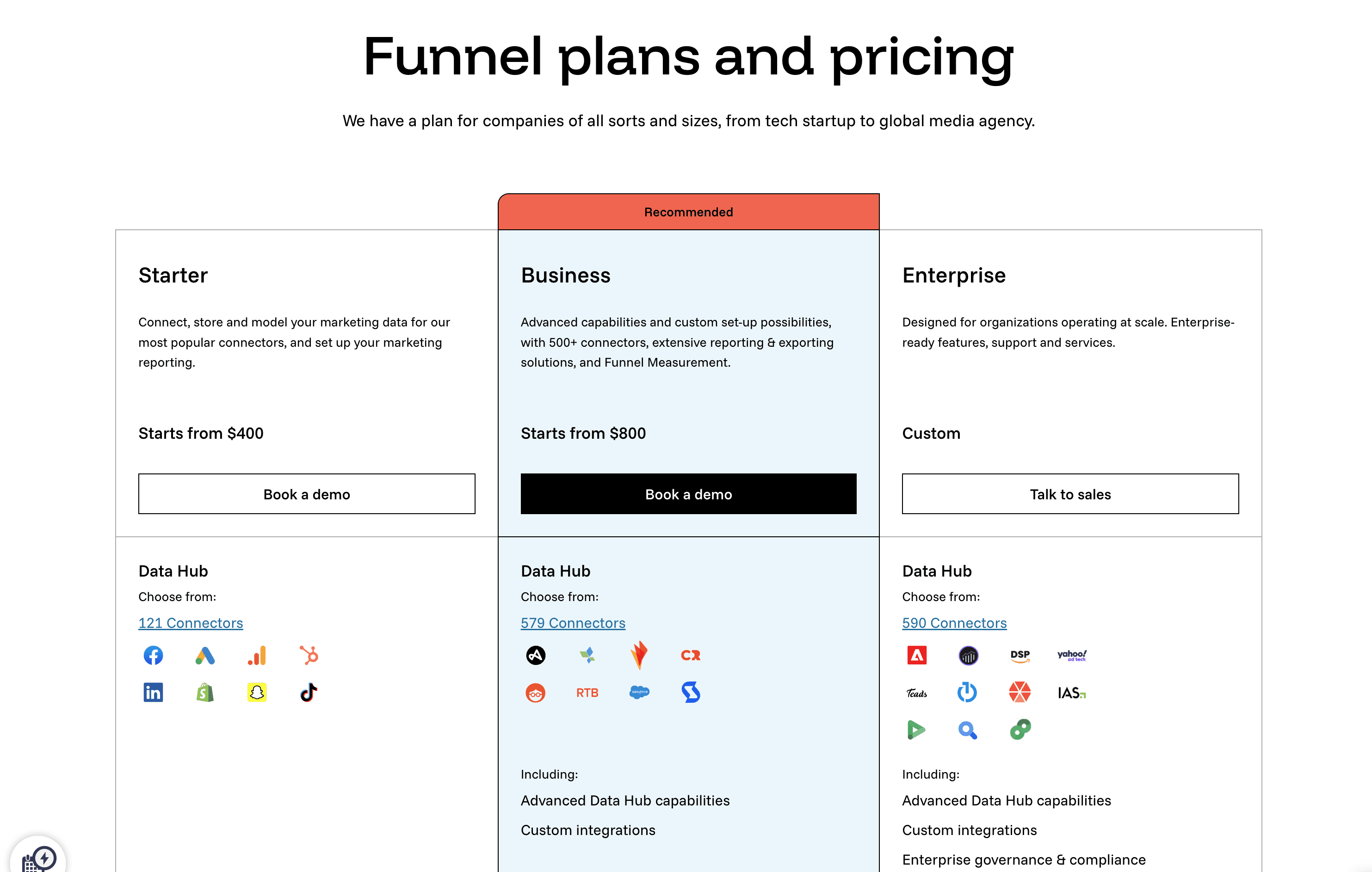
Create upsell opportunities by packaging AI capabilities as premium tiers. Funnel.io Funnel.io rolled out a suite of AI features, sunsetted the free tier, and bumped the starter tier to $400/month at entry.
The competitive dynamics are clear: platforms that move quickly to embed AI-powered intelligence will capture user loyalty, while those that delay risk losing customers to more innovative alternatives.
The Trust and Governance Challenge
Speed isn't everything. Marketers need to trust the insights AI provides. According to the IAB report, half of marketers anticipate legal, privacy, or accuracy challenges with AI in the next two years. The "black box" problem, where AI-driven insights can't be explained or traced, remains a significant concern.
Winning platforms will balance speed with transparency, providing not just answers but the reasoning and data sources behind them.
Frequently Asked Questions
What is AI analytics in marketing intelligence? AI analytics helps marketing teams turn raw data from ads and analytics platforms into real-time insights, predictions, and recommendations for smarter campaign decisions.
How much does AI marketing analytics implementation typically cost? It depends on scale. Cloud-based tools offer the most affordable entry point, while enterprise deployments with custom integrations require larger upfront investment.
What percentage of marketers currently use AI tools? 66% globally, rising to 74% among US marketers, according to HubSpot's 2025 research. The most common use cases are content creation, research, and data analysis.
How does AI analytics improve marketing personalization? It analyzes behavioral signals across channels to dynamically recommend content, timing, and audience segments at a scale that manual processes can't match.
What are the benefits of conversational analytics for marketing teams? Faster insights, less dependency on data teams, and the ability to ask follow-up questions in real time. Anyone on the team can interrogate campaign performance without waiting on a analyst to pull a report.
Can conversational analytics replace a data analyst? Not quite, but it handles the routine stuff: pulling metrics, spotting trends, comparing performance across channels. Analysts can then focus on higher-value interpretation and strategy rather than data wrangling.
How do you add AI analytics without rebuilding your data infrastructure? The best embedded solutions sit on top of your existing data layer via a semantic layer or direct connector, so there's no migration, no rearchitecting, and no disruption to what's already working.
What's the risk of delaying AI analytics features? Competitors ship first, the feature becomes table stakes, and you're playing catch-up. Prospects start asking why your product doesn't have it, and it becomes an active blocker in sales conversations.

Try Upsolve for Embedded Dashboards & AI Insights
Embed dashboards and AI insights directly into your product, with no heavy engineering required.
Fast setup
Built for SaaS products
30‑day free trial